
Summer Running Goals: Why Most Runners Don’t Finish 5K, 10K or Half Marathon—and How to Stay Injury-Free
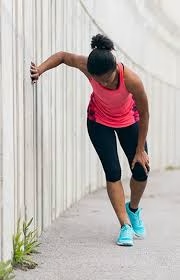
As summer approaches, many individuals set goals to complete a 5K, 10K, or half marathon. While motivation is high at the start, a significant proportion of recreational runners fail to complete their training programmes.
This is not simply due to lack of discipline.
Evidence suggests that injury risk, poor training progression, and inadequate recovery strategies are the primary reasons for dropout.

What Does the Evidence Say?
Research consistently shows that:
- 30–50% of recreational runners sustain an injury each year (van Gent et al., 2007; Videbæk et al., 2015)
- The most common causes include:
- Sudden increase in training load
- Poor biomechanics
- Muscle weakness and imbalance
- Overuse injuries such as patellofemoral pain, Achilles tendinopathy, and IT band syndrome are highly prevalent
Importantly, many of these injuries are preventable with early assessment and targeted intervention.
Lorem ipsum dolor sit amet, consectetur adipiscing elit. Ut elit tellus, luctus nec ullamcorper mattis, pulvinar dapibus leo.
Why Do Runners Drop Out?
From a clinical perspective, runners often stop due to:
1. Training Load Errors
Rapid increases in mileage or intensity exceed the body’s capacity to adapt.
2. Biomechanical Inefficiencies
Altered movement patterns increase stress on specific tissues.
3. Inadequate Strength and Conditioning
Weakness in key muscle groups (e.g., gluteals, calf complex) contributes to injury risk.
4. Poor Recovery Strategies
Lack of structured recovery leads to cumulative fatigue and overload.
🧠 The Role of Prehabilitation
Current sports medicine literature emphasises prehabilitation (preventive rehabilitation) as a key strategy in reducing injury risk.
Prehabilitation includes:
- Movement screening
- Strength and conditioning
- Education on load management
Studies suggest that targeted exercise programmes can significantly reduce the incidence of running-related injuries (Lauersen et al., 2014).
Evidence-Based Running Package
🔍 1. Pre-Injury Screening (Running MOT)
A comprehensive assessment including:
- Functional movement analysis
- Joint mobility and muscle strength testing
- Identification of asymmetries and risk factors
👉 This aligns with best practice in early risk identification.
🩺 2. Physiotherapy Consultation
A personalised clinical assessment to:
- Address existing symptoms
- Optimise biomechanics
- Develop an individualised training strategy
👉 Tailored interventions are shown to improve outcomes compared to generic programmes.
💆 3. Sports Massage (2 Sessions)
Massage therapy may:
- Improve perceived recovery
- Reduce muscle stiffness
- Enhance short-term performance readiness
(Weinert-Aplin et al., 2022)
🎓 4. Education Session on Running
Education is a critical but often overlooked component.
We cover:
- Load management principles (e.g., gradual progression)
- Warm-up and recovery protocols
- Injury warning signs
👉 Education improves adherence and reduces injury risk.
🎯 Who Will Benefit?
This programme is particularly useful for:
- Beginner runners preparing for a 5K or 10K
- Individuals progressing to longer distances (half marathon)
- Runners with previous injuries
- Recreational athletes seeking structured guidance
🏁 From Intention to Completion
Completing a running goal is not just about motivation—it is about preparation, progression, and prevention.
An evidence-based approach can:
- Reduce injury risk
- Improve training consistency
- Increase the likelihood of completing your event
📍 Book Your Running MOT
If you are planning to run this summer, the most effective strategy is to prepare before problems arise.
👉 Contact Blue Maya Physio Clinic to book your Running MOT Clinic Package
👉 Available across our clinics
📚 References (Harvard Style)
- Lauersen, J.B., Bertelsen, D.M. and Andersen, L.B. (2014). The effectiveness of exercise interventions to prevent sports injuries: a systematic review and meta-analysis. British Journal of Sports Medicine.
- van Gent, R.N. et al. (2007). Incidence and determinants of lower extremity running injuries. British Journal of Sports Medicine.
- Videbæk, S. et al. (2015). Incidence of running-related injuries per 1000 hours of running. Sports Medicine.
- Weinert-Aplin, R.A. et al. (2022). The effects of massage on sports performance and recovery.